Secure attachment begins with nervous system safety
Ambivalent attachment reflects a nervous system shaped by inconsistency, not a lack of understanding.
Many people who long for secure connection have spent years working to understand themselves and their relationships—often without finding the steadiness they’re hoping for. This is especially true for those of us with ambivalent attachment adaptations, where insight alone doesn’t always bring relief.
You may understand your patterns well and still feel unsettled in connection. Reassurance may be offered, yet not fully land. Closeness may be deeply desired, yet accompanied by anxiety, disappointment, or a sense of needing more. These experiences reflect how the nervous system learned to stay oriented toward connection under conditions of uncertainty.
Ambivalent attachment often forms when care and availability were inconsistent—present at times, missing at others.
Over time, the nervous system learns to stay alert, attuned, and mobilized in relationship. Longing becomes intertwined with vigilance and safety doesn’t reliably settle us, even when we desire connection.
Because these patterns are organized at the level of the nervous system, they can’t be resolved through willpower or insight alone. They shift through experiences of regulation, protection, and connection that the body can register as real and reliable.
Even deeply ingrained attachment patterns can soften when we approach them through nervous system experience rather than insight alone.
Through gentle, embodied practices, you’ll start to understand why love and connection can feel hard to receive—even when they’re present—and what supports a growing sense of steadiness, choice, and secure connection over time.
Whether you’re a clinician seeking deeper embodied understanding, someone exploring your own relationships, or you want to learn how to support someone with this relational pattern, this masterclass offers a compassionate, non-shaming way to begin working with ambivalent attachment from the inside out.
In this live masterclass, Dr. Liz George offers a grounded, experiential introduction to ambivalent attachment through a nervous-system lens. Rather than analyzing patterns from a distance, you’ll be guided to notice how attachment responses show up in your body and what helps them begin to settle.
Begin creating a felt sense of secure attachment through regulation, boundaries, and connection.
Join This FREE, 90-Minute Live Masterclass, where Dr. George explores Ambivalent Attachment through a body-based lens…
1
How ambivalent attachment is shaped in the nervous system
Including its physiological and polyvagal patterns, and how these shape sensitivity to connection, reassurance, and relational shifts. You’ll begin to see how these responses develop as adaptive strategies, and how they continue to organize experience in present-day relationships.
2
Why longing and dissatisfaction often coexist
And the patterns that prevent love and care from being fully felt or received, even when they’re present and genuine. This section helps clarify why reassurance may not land and why closeness can intensify anxiety, rather than resolve it, at the level of the nervous system.
3
How ambivalent attachment differs from avoidant and disorganized adaptations
The unique ways that ambivalent organizes protection, closeness, and distance in the body, and the foundational supports that help attachment pain soften. You’ll learn what specifically supports regulation and steadiness for ambivalent patterns, rather than applying approaches designed for other attachment adaptations.
A grounded, non-shaming introduction to ambivalent attachment—designed to be felt, not just understood.
Can’t join our session live? Register anyway, and we’ll send you a free, limited-time replay.
Who Should Join Us?
Learn Through Live, Body-Based Attachment Work in This Expert Spotlight Training, with Q&A
Anyone on a personal healing journey who longs for deeper, more secure connection, and wants to understand why closeness can feel difficult to fully receive. You’re seeking compassionate, embodied ways to feel steadier in relationship.
Therapists, counselors, and mental health professionals who want a deeper, embodied understanding of ambivalent attachment and how it shows up in the nervous system, both personally and clinically, without relying on pathologizing labels or overwhelming interventions.
Body-based and somatic practitioners, including yoga teachers, massage therapists, movement educators, and physical therapists who want to recognize how attachment patterns live in the body, and how regulation, protection, and connection support greater ease and relational safety.
Partners of people with ambivalent attachment patterns who want to better understand why reassurance or contact can feel so important to their partner, and how to respond with greater steadiness, clarity, and compassion without losing themselves in the process.
Clinicians trained primarily in cognitive or insight-based models who want to integrate nervous-system and body-based awareness into their attachment work.
In this all-new, live, and experiential masterclass, Dr. Liz George explores how ambivalent attachment lives in the nervous system—and shares embodied practices that support a return toward secure connection.
Join us live for 90 minutes of teaching and Q&A as we explore how ambivalent attachment takes shape in the nervous system and how body-based awareness supports greater steadiness, connection, and choice in relationship.
Register to Save Your Spot!
Healing the Longing for Belonging
Rediscovering Secure Attachment
for Ambivalent Adaptations
Becoming familiar with our own nervous system allows us to see how these patterns are directly connected to the way attachment is regulated.
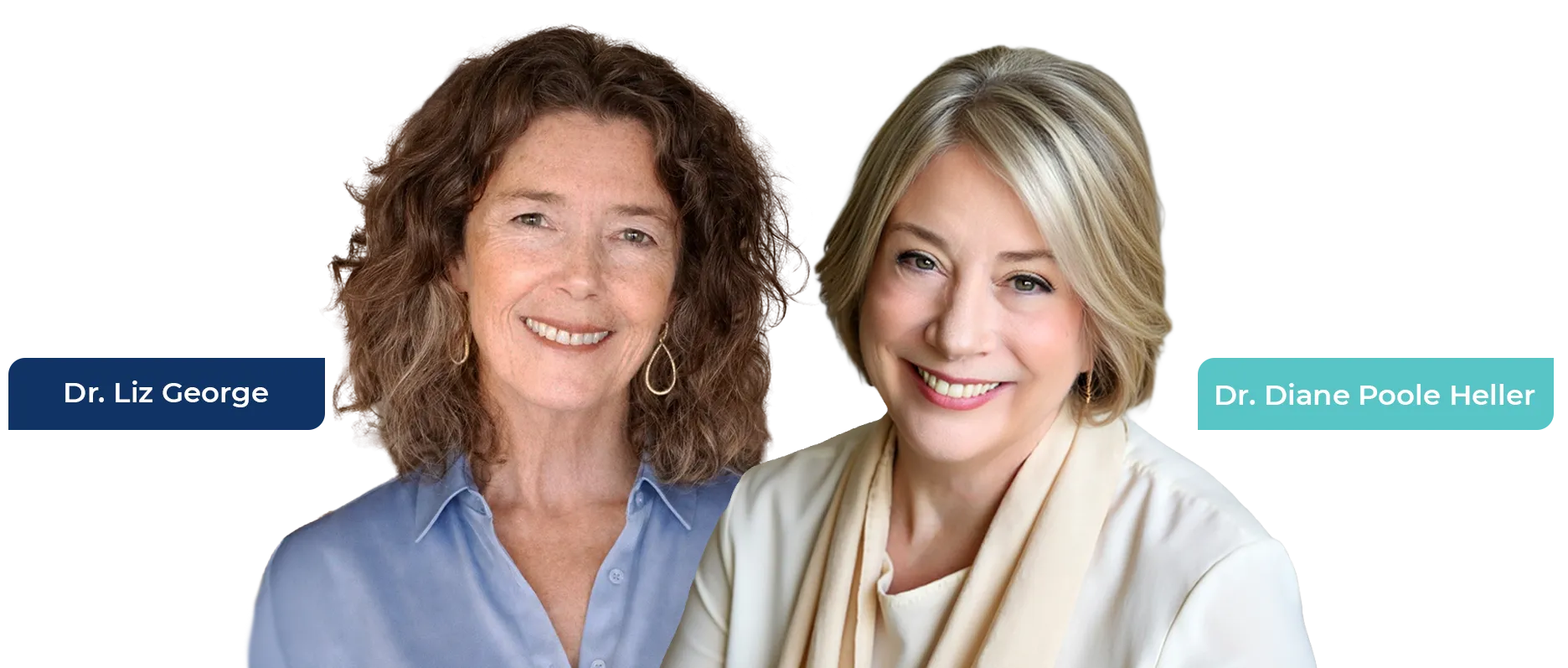
Liz George, PhD, is a licensed clinical psychologist in private practice in Boulder, Colorado. She received her Ph.D. in Clinical Psychology from University of CO at Boulder and was a research associate there until 2012, working with individuals with bipolar disorder. She is co-author of The Bipolar Teen and multiple research articles on the psychosocial treatment of bipolar disorder.
A somatic-based clinician for over 20-years, Dr. George is a certified Brainspotting therapist, a Somatic Experiencing Practitioner, a Somatic Resilience and Regulation for early trauma touch therapist, and a DARe (Dynamic Attachment Repatterning Experience) practitioner.
Our goal is to uncover secure attachment, allowing it to prevail over relational trauma or attachment disruptions—or to help us recover more quickly from distress.
Diane Poole Heller PhD, is an internationally recognized speaker, author, and teaching expert in the field of adult attachment theory and trauma resolution.
Her signature approach—DARe (Dynamic Attachment Re-patterning experience)—provides therapists and individuals with relevant skills and practical exercises that facilitate healing from attachment and trauma wounds.
Her work with adult attachment has forged a path for adults with childhood attachment injuries to develop Secure Attachment Skills (SAS) that lead to more connected and fulfilling adult relationships.
She has authored several books, including the widely acclaimed The Power of Attachment: How to Create Deep and Lasting Intimate Relationships. Her expertise in trauma healing has supported survivors, helpers, and families affected by events such as 9/11, Columbine, and other school shootings.
Through various training programs, books, lectures and her own work as a clinical therapist, Dr. Heller has helped a countless number of people in their healing journey towards experiencing greater intimacy, wholeness and more fulfilling relationships.
She believes that when we heal ourselves first, we heal our families, our communities and the world as a whole.